Around 4 in 10 cancers are linked to things you can change. Here's exactly what to change.
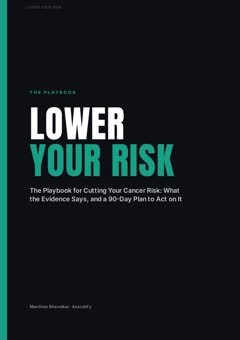
The World Health Organization's 2026 analysis found that about 37% of new cancer cases worldwide came from avoidable causes like tobacco, infections and alcohol. Lower Your Risk turns the official advice from the WHO, cancer research charities and national health services into one clear plan: what matters most, what's a myth, which vaccines and screening tests you need at your age, and a 90-day plan to act on it.
- The full Lower Your Risk playbook (phone or laptop)
- The causes ranked by how much they actually matter, so you stop worrying about the wrong things
- Tobacco in every form, including gutka, khaini, paan and areca nut, with a quit plan
- Screening and vaccine tables for the US, UK and India, by age
- The warning signs that mean "see a doctor", the myths to ignore, and a 90-day plan with trackers
- The full playbook (phone or laptop)
- Risk Audit
- Quit plan
- 90-day plan, step by step
- Who it's for
- Adults, men and women, who want to know which changes lower cancer risk the most, for themselves and their family.
- What you'll learn
- The causes ranked by how much they matter, a tobacco quit plan, screening and vaccine tables for the US, UK and India by age, the warning signs, the myths and a 90-day plan.
- Why it's different
- It turns official guidance from the WHO, cancer research charities and national health services into one clear plan. It is an education guide, not medical advice.
How it works
- Pay onceOne-time payment by PayPal, card or UPI.
- Download instantlyRight after you pay, a download button appears on this page, and the link is emailed to you.
- Follow the planRead it on your phone or laptop, then follow the 90-day plan, step by step.
After you pay, you get
The book and its Bonus Pack, delivered together in one licensed download straight after payment.
- The book: Lower Your Risk (PDF, licensed to you)
- Chapter Workbook: one worksheet for each chapter, built from its sections
- One-Page Cheat Sheet: the core steps on a single page
- The 90-Day Plan, step by step: every step from the book with a tick box and space for notes
- Risk Audit, Family History + Screening Record
- 90-Day Measurements Tracker
- Spreadsheet version of the tracker with the calculations already set up
Plus the add-ons
- 100 Everyday Swaps and Habits
- Doctor Visit Preparation Sheet (editable)
- Weekly Lower-Risk Meal Planner (editable)
- Smoke-Free and Alcohol-Light Social Plan (editable)
- Prevention Action Kit
- Helping Your Family Lower Their Risk
- Prevention Numbers Quick Reference
- Future updates: new chapters and updates to the book are emailed to you
What's inside
How risk really works
Why cancer is partly luck and partly not, what "causes cancer" actually means, and the causes ranked by how much they matter.
The big three
Tobacco in every form (with a quit plan that works), alcohol, and body weight: the changes that move your risk the most.
Food, movement and sun
What the evidence says about meat, fibre, processed food and hot drinks, a simple activity plan, and sun protection that actually works.
Vaccines and infections
HPV, hepatitis B and C, H. pylori: the most underused protection there is, and who should get what.
Screening and warning signs
US, UK and India screening tables by age, plus the symptoms that mean "book a doctor" and how soon.
Myths and the 90-day plan
Alkaline diets, supplements, phones and deodorants checked against the evidence, then a week-by-week plan and trackers.
Every technique inside, by name
The 47 named techniques, frameworks and tools this book teaches, taken from the book itself. £1,720.00 one-time, instant PDF download.
- Cancer risk is a dial, not a switch
- IARC carcinogen groups (Group 1, 2A, 2B, 3)
- The causes of cancer that matter most
- Genes vs lifestyle
- Tobacco in every form
- Smokeless tobacco, paan, gutka and areca nut
- Second-hand smoke
- Vaping and e-cigarettes
- What happens when you quit smoking
- The quit plan
- Alcohol as a Group 1 carcinogen
- How to cut down on alcohol
- Body fat and cancer
- How to lose fat and keep it off
- 150 minutes of activity a week
- Sitting less: a 10-minute walk after meals
- The plate rules
- Processed and red meat
- Fibre
- Ultra-processed food
- Very hot drinks above 65°C
- Aflatoxin and food safety risks
- Broad-spectrum sunscreen
- Sunbeds
- Checking your skin
- HPV vaccine
- Hepatitis B
- Hepatitis C test
- H. pylori
- Outdoor air pollution
- Indoor smoke from cooking and heating
- Radon
- Asbestos and work exposures
- Hormone replacement therapy (HRT)
- Breastfeeding
- Family history (BRCA, Lynch syndrome)
- Screening by age: USPSTF, NHS England and India
- Cervical screening
- Breast screening (mammogram)
- Bowel screening (FIT, colonoscopy)
- Lung screening
- Mouth (oral) check
- Warning signs: when to see a doctor
- Cancer myths: supplements, superfoods, alkaline diets
- The Risk Audit
- The 90-day plan
- Screening and vaccine record
Last updated:
Inside the book
Every part and every tool in your kit, at a glance.
- 01How risk really works
- 02The big three
- 03Food, movement and sun
- 04Vaccines and infections
- 05Screening and warning signs
- 06Myths and the 90-day plan
- Risk Audit
- Quit plan
- 90-day plan, step by step
The evidence behind it
Every number in the guide comes from a named health body or study, listed on its Sources page. Four of them:
About 4 in 10 cancers come from causes you can change
A WHO and IARC analysis published in February 2026 found 37% of new cancer cases worldwide came from causes that can be avoided or changed: 45% in men and 30% in women.
Quitting tobacco pays back over time
According to the US CDC, the added risk of mouth, throat and voice-box cancer drops by about half 5–10 years after quitting. For lung cancer it halves after 10–15 years.
Processed meat is Group 1
In 2015 IARC, the WHO's cancer agency, classed processed meat as Group 1. It estimates that each 50 g eaten daily raises the risk of bowel cancer by about 18%.
The HPV vaccine prevents most HPV cancers
The US CDC says the HPV vaccine can prevent more than 90% of cancers caused by HPV. It works best before any exposure, which is why it's given young.
Not just your own risk
The guide is written for you, but a lot of the plan covers the people and places around you. The same checklists work for:
Your children
Check their records for the HPV and hepatitis B vaccines. The guide lists when each is offered in the US, the UK and India, and when to ask a doctor about catch-up.
Your parents
The screening checklist by age covers bowel, breast and lung screening and the prostate discussion into the 70s, plus the warning signs that should send anyone to a doctor.
Your home
A smoke-free home and car, a radon check where levels run high, and cleaner cooking fuel with good ventilation. The guide explains why each one matters.
Health claims you see online
A myth table covers alkaline diets, supplements, phones and more. One rule for any new claim: if someone says a product prevents or cures cancer and is also selling it, be very sceptical.
Who it's for
For you if
You want the official advice on lowering your cancer risk in one place, in plain English, with screening and vaccine tables for the US, the UK or India and a 90-day plan to act on it, for yourself or your family.
Not for you if
You have symptoms or need a diagnosis or treatment: see a doctor, as the guide itself says. It's also not for you if you're looking for a supplement, detox or special diet that "prevents cancer". The evidence doesn't support them, and the guide says so.
Who's behind this
Lower Your Risk is written by Manthan Bhendkar, founder of Asendify. He is not a doctor, so the guide doesn't rest on his opinion. It brings together the published advice of the WHO and IARC, the World Cancer Research Fund, the American Cancer Society, the US CDC and Preventive Services Task Force, the NHS, Cancer Research UK and India's national programmes, all listed in its Sources page. It is an education guide, not medical advice, and it cannot guarantee that you will not develop cancer.
Questions
Will this stop me getting cancer?
No guide can promise that, and you should be wary of anyone who does. What the evidence shows is that around 4 in 10 cancer cases are linked to causes people can change, and that finding cancer early makes treatment work better. This playbook helps you do both. It lowers risk; it can't remove it.
Where does the information come from?
The World Health Organization and its cancer agency IARC, the World Cancer Research Fund, the American Cancer Society, the US CDC and Preventive Services Task Force, the NHS, Cancer Research UK and India's national programmes. Every source is listed at the back.
Is this medical advice?
No. It's an education guide that helps you understand the evidence and ask your doctor the right questions. If you have symptoms, a family history of cancer or a medical condition, see a doctor.
Does it sell supplements or special diets?
No. The evidence says supplements don't prevent cancer and some have made things worse. There's nothing to buy beyond this guide.
How do I get it?
Right after you pay, a download button appears on this page, and the link is emailed to you.
Why is my name on the PDF?
Each copy is licensed to one person. Your name and a unique license ID are printed in it, which stops copies being passed around and resold.
Who is it for?
Adults, men and women, who want to understand which changes lower cancer risk the most and act on them. It also covers your children's vaccines and your parents' screening. It is an education guide, not medical advice.
I've already been diagnosed. Is this for me?
It isn't a treatment guide, and it never tells you to replace any treatment, medicine or doctor's advice. If you or someone you love has been diagnosed, the guide is about lowering risk in the future, not about fault. Your doctors are the right people to ask about your own care.
What format is it, and what's inside?
A PDF guide in 15 parts plus a Sources page, read on a phone or laptop: how risk works, tobacco, alcohol, body weight, activity, food, sun, infections and vaccines, air and work, hormones and family history, screening, warning signs, myths, the 90-day plan, and trackers and checklists.
How much time does it take?
The Risk Audit takes about ten minutes. Week one is for checking vaccine records and booking any screening you're due for. The 90-day plan then adds one change at a time, so each becomes a habit before the next.
Can I get a refund?
No. Every sale is final because the download is instant. If the file is faulty or won't open, email ceo@asendify.co and we fix it or refund you.